
分会场二
报告人1:
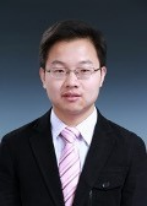
Title: Minimum Sample Data for Direct Data-driven Analysis and Adaptive LQR Design of Unknown Linear Systems
Abstract: Modern control theory has been firmly rooted in the state-space model, and then adopts system identification (SysId) followed by model-based control design methods. In this talk, we are motivated by two questions that possibly promote rethinking of this foundation: (a) whether SysId is indispensable to control design, and (b) if not, can we address it in a direct data-driven fashion (bypassing the SysId step)? In particular, via a new concept of sufficient richness of input sectional data, we first establish the necessary and sufficient condition for the minimum sample data for property ID (system analysis) of unknown linear systems. Specifically, the input sectional data is sufficiently rich for property ID if and only if it spans a linear subspace that contains a property dependent minimum linear subspace, any vector basis of which can also be easily used to form the minimum excitation input. Interestingly, we show that many structural properties can be identified with the minimum input that is however unable to complete SysId. Then, we propose an optimal data-enabled LQR formulation in the sense of achieving minimum regret of the quadratic cost, and design a novel data-enabled policy optimization (DeePO) method using only a batch of online persistently exciting (PE) data. Finally, we numerically validate the theoretical results and demonstrate the computational and sample efficiency of our method.
Keyou You received the B.S. degree in Statistical Science from Sun Yat-sen University, Guangzhou, China, in 2007 and the Ph.D. degree in Electrical and Electronic Engineering from Nanyang Technological University (NTU), Singapore, in 2012. After briefly working as a Research Fellow at NTU, he joined Tsinghua University in Beijing, China where he is now a Full Professor in the Department of Automation. He held visiting positions at Politecnico di Torino, Hong Kong University of Science and Technology, University of Melbourne and etc. Prof. You’s research interests focus on the intersections between control, optimization and learning as well as their applications in autonomous systems. He received the Guan Zhaozhi award at the 29th Chinese Control Conference in 2010 and the ACA (Asian Control Association) Temasek Young Educator Award in 2019. He received the National Science Funds for Excellent Young Scholars in 2017, and for Distinguished Young Scholars in 2023. Currently, he is an Associate Editor for Automatica, IEEE Transactions on Control of Network Systems, and IEEE Transactions on Cybernetics.
报告人2:
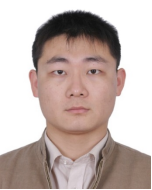
Title: Small-Gain Methods for Safety-Critical Control
Abstract: Most of This talk introduces some recent results with refined small-gain techniques to handle the interaction between optimization and control algorithms for safety-critical systems. In particular, the talk will discuss how safety-critical control problems can be solved for nonlinear systems involving dynamic uncertainties, with refined nonlinear small-gain techniques as tools. Based on the preliminary results introduced in this talk, we expect further advancement of the interconnected systems tools and new robust algorithms for safety-critical systems.
Tengfei Liu received the B.E. degree in automation, in 2005, the M.E. degree in control theory and control engineering, in 2007, both from South China University of Technology, Guangzhou, China, and the Ph.D. degree in engineering from RSISE, the Australian National University, Canberra, Australia, in 2011. From 2011 to 2013, he was a Postdoc with faculty fellowship at Polytechnic Institute of New York University. Since 2014, he has been a Faculty Member with State Key Laboratory of Synthetical Automation for Process Industries at Northeastern University. Dr. Tengfei Liu has served as an associate editor for IEEE Transactions on Automatic Control, Systems and Control Letters, and Science China: Information Sciences. His research interests include stability and control of interconnected nonlinear systems.
报告人3:
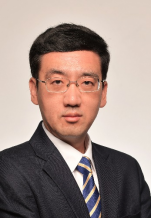
Title: Robust Energy Management and Operation of Integrated Energy Systems under Multiple Uncertainties
Abstract: Integrated energy station (IES) systems coupling diverse energy sectors can facilitate the low-carbon and sustainable transition by integrating massive wind-solar power and energy conversion technologies. With the increasing diversification of new energy carriers and demand, how to plan energy infrastructure with uncertain prior knowledge has become the primary issue. Secondly, in the face of various uncertainties and extreme weather, it is further necessary to consider how to manage multiple energies and harden infrastructure, in order to improve renewable energy utilization and enhance the resilience of the energy system. Thirdly, for system operation, we need to identify faults as accurate as possible to take appropriate maintenance subsequently. Considering these issues, the talk will present some recent results in the framework of distributionally robust optimization and data-driven method. At last, the talk will introduce the design of energy management platform to support flexible and efficient system operation.
Bo Yang received the PhD degree in electrical engineering from City University of Hong Kong, Hong Kong, in 2009. He held visiting positions with KTH, Sweden and New York University, USA. He is currently a full professor with Shanghai Jiao Tong University, Shanghai, China. His research interests include optimization and control for energy networks and Internet of Things. He has been the principal investigator in several research projects, including the National Science Fund for Distinguished Young Scholars and National Key Research and Development Program of China.
报告人4:
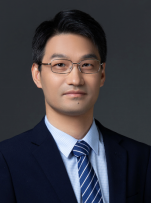
Title: High-order Fully Actuated Models for 2D Discrete Systems
Abstract: The concept of full actuation is generalised to 2D discrete systems, and linear and nonlinear high-order fully actuated (HOFA) 2D Roesser and Fornasini-Marchesini models are presented. By taking advantage of the feature of full actuation, control laws can be designed such that the closed-loop systems for nonlinear 2D discrete systems are linear shift-invariant 2D discrete systems. Based on such a great advantage, a basic framework is presented for HOFA approaches of 2D discrete systems. As examples of this HOFA approach, a simple nonlinear 2D Roesser system and a class of strict feedback Fornasini-Marchesini 2D systems are investigated. Firstly, these two systems are transformed into high-order fully actuated 2D systems, and then control laws are designed by applying the property of full actuation. These two examples illustrate that the fully-actuated system approach can also be an effective tool to deal with nonlinear 2D systems.
Ai-Guo Wu received the B.Eng. degree in automation, the M.Eng. degree in navi- gation, guidance, and control, and the Ph.D. degree in control science and engineering from the Harbin Institute of Technology, Harbin, China, in 2002, 2004, and 2008, respectively. In 2008, he joined the Shenzhen Graduate School, Harbin Institute of Technology, Shenzhen, China, as an Assistant Professor, where he was promoted to a Professor in 2012. From 2009 to 2011, he was a Research Fellow with the Department of Manufacturing Engineering and Engineering Management, City University of Hong Kong, Hong Kong. From 2013 to 2014, he was a Visiting Professor with the Department of Electrical, Electronic, and Computer Engineering, The University of Western Australia, Perth, WA, Australia. Since 2018, he has been a Professor with the Harbin Institute of Technology (Shenzhen). He has authored or coauthored one English monograph and over 120 SCI journal articles. He was supported by the Program for New Century Excellent Talents in University in 2011 and the National Natural Science Foundation of China for Excellent Young Scholars in 2018. His current research interests include fully actuated systems theory, spacecraft control and time-delay systems. Prof. Wu received the National Natural Science Award (Second Prize) in China in 2015 and the National Excellent Doctoral Dissertation Award from the Academic Degrees Committee of the State Council and the Ministry of Education of China in 2011. Since 2007, he has been a Reviewer of American Mathematical Review. He was an Outstanding Reviewer of the IEEE TRANSACTIONS ON AUTOMATIC CONTROL in 2010. He has been serving as a Regional Editor for Nonlinear Dynamics and Systems Theory since 2015 and an International Subject Editor for Applied Mathematical Modeling since 2017.
< <-: